An accounts employee receives an email asking for updated bank details. The request is unusual. Instead of changing the details immediately, the employee calls the supplier using a verified phone number. That simple check could prevent a costly fraud.
This is the practical value of a Security Awareness Training Program in India. Employees handle sensitive information and make security decisions throughout the working day, without involving IT. Training helps them recognise warning signs, verify requests, and report concerns promptly.
Awareness programmes work best alongside email protection, access controls, and multifactor authentication. They provide clear habits and dependable support.
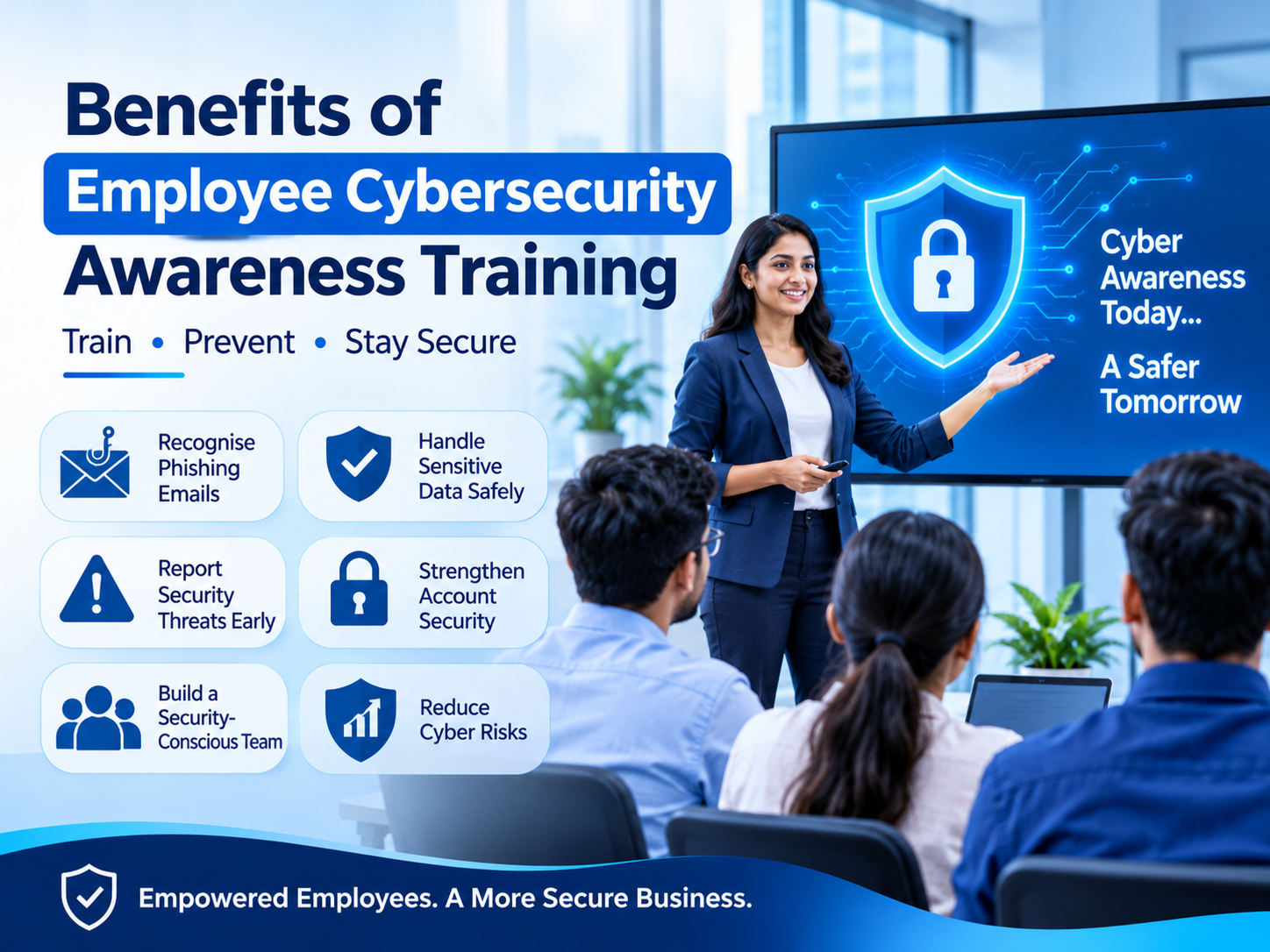
Cybersecurity awareness training helps employees understand risks they might encounter through email, messaging platforms, shared files, and workplace devices. Topics include phishing, password security, social engineering, data handling, and incident reporting.
The content should match actual responsibilities. Finance teams need to verify payment changes. HR teams handle identity documents and employee records. Customer support staff may encounter suspicious links sent through chat or email.
Training should encourage application, not just assessment.
Phishing messages no longer always contain obvious spelling errors. Fraudulent emails may imitate vendors and demand immediate action.
Training teaches staff to examine unexpected requests, involving credentials, payments, or files. Employees should know how to verify a sender through a separate, trusted channel.
Practice exercises can identify gaps, when feedback is constructive rather than punitive.
An employee might accidentally email a customer spreadsheet to the wrong person or make a cloud folder accessible to anyone with its link. Neither mistake requires malicious intent.
A Security Awareness Training Program in India can explain data classification, approved storage locations, and safe sharing procedures. Checking recipients deserves reinforcement.
Technical safeguards remain necessary because even attentive employees sometimes make mistakes.
If someone clicks a suspicious link, their next decision matters. Punitive reporting can encourage silence.
Training should provide a clear reporting contact and explain what information is helpful. A prompt report gives security teams an opportunity to investigate, revoke access, or reset affected credentials.
Organisations benefit from treating honest reporting as responsible behaviour rather than a reason for embarrassment.
Unique passwords, password managers, and multifactor authentication reduce account-related risks. Employees also need to recognise unexpected login prompts and requests for one-time codes.
For example, a message appearing to come from IT might ask someone to approve an authentication request they did not initiate. Training makes it easier to pause and verify before responding.
These lessons complement technical controls.
Remote and hybrid employees access business systems from homes, shared workspaces, and while travelling. Everyday risks include unattended laptops, exposed screens, outdated software, and unapproved file-sharing tools.
Clear guidance helps staff understand which applications they can use, how to protect devices, and how to report a loss. Policies should be practical for different working arrangements across different equipment and connectivity.
Security procedures should help people complete their jobs safely. A receptionist who receives an unexpected attachment or a manager asked to share confidential records needs a straightforward way to respond.
Scenarios show what to verify and whom to contact. Familiar workplace examples make policies easier to remember than technical definitions alone.
Attendance records do not show whether employees recognise suspicious activity. Useful measures include reporting rates, repeated errors, exercise results, and how quickly genuine incidents reach security teams.
A Security Awareness Training Program in India should use those findings to improve future sessions. Results should guide departmental coaching, not public rankings.
Start with a review of common threats, sensitive data, and employee responsibilities. Provide onboarding training, short refreshers, and realistic exercises regularly.
Include scams that employees actually encounter, such as WhatsApp impersonation, fraudulent supplier payment changes, and suspicious Microsoft 365 login requests. Coordinate guidance between IT, HR, and department leaders to keep reporting consistent.
For a business, the first priority may be protecting customer records and payment approvals. A larger organisation might also need tailored training for contractors and privileged users. Whatever the size, employees should be able to find the reporting procedure quickly, even when they are unsure whether an incident occurred.
Training supports governance and compliance efforts, but legal obligations and technical controls need separate attention.
Why is employee cybersecurity awareness training important?
It helps staff recognise threats, protect information, and report concerns before an incident becomes more serious.
How often should employees receive cybersecurity training?
Provide training during onboarding and regular refreshers, with additional guidance after important policy or threat changes.
What does a Security Awareness Training Program in India cover?
Typical subjects include phishing, password protection, data sharing, device security, impersonation attempts, and incident reporting.
Can training prevent every phishing attack?
No. Training reduces some risks but must work alongside technical controls, monitoring, and incident response.
Are phishing simulations helpful for small companies?
They can be useful when relevant to actual risks and followed by supportive, practical feedback.
How can businesses measure training results?
Review reporting behaviour, recurring errors, simulation trends, employee feedback, and improvements in response times.


 Home
