Running a small business means switching between customers, paperwork, sales, and daily decisions, with a small team. Artificial intelligence can take on some of that routine work, giving employees more time for problems that need personal attention. The challenge is finding tools that fit the business rather than adding another system to manage.
For companies considering AI integration Services in Thane, India, the first question should be whether AI can work with their website, CRM, accounting software, or internal records. AI automation Services in Thane, India, focus on making recurring tasks easier to complete, from sorting enquiries to preparing documents. Neither approach requires replacing people or changing everything overnight. A clear objective, usable data, and human checks are a better starting point.
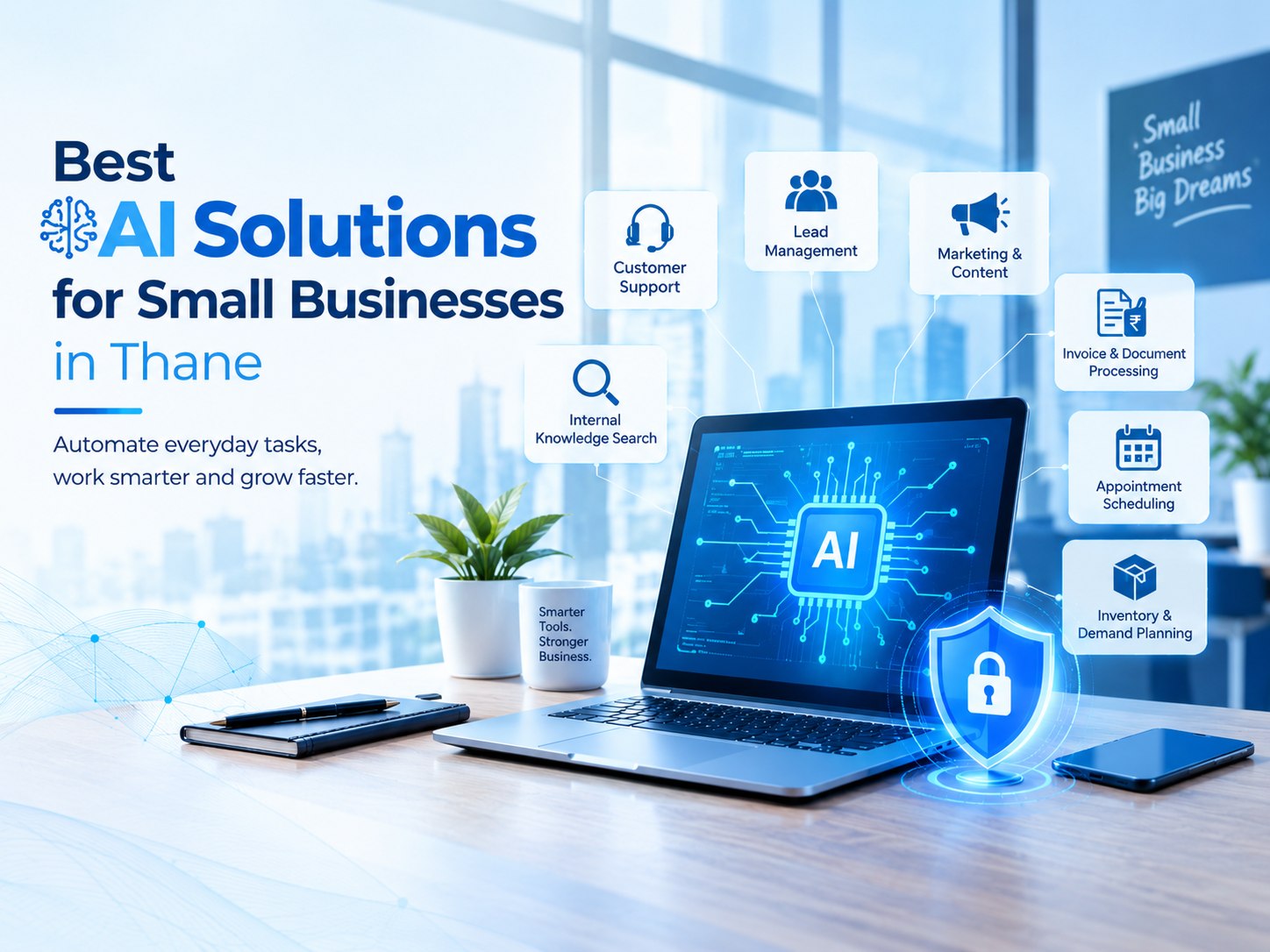
The most useful applications solve problems employees notice. Seven areas stand out.
Customers ask recurring questions: Are you open today? Is an item available? Can I change my booking? An AI assistant can answer enquiries using approved information and pass unusual requests to a team member.
An assistant needs updated answers and a clear handover process. Customers should also know when they are speaking to a bot.
Enquiries may arrive through website forms, email, calls, or messaging apps. When a small sales team is busy, leads can be overlooked.
AI tools can summarize enquiries, organize contact details, and help staff prioritize follow-ups. AI integration Services in Thane, India, may connect these features with a customer relationship management system. Employees should verify records before acting and respect customers' communication preferences.
Planning a month's content takes effort, even before design and publishing begin. AI can help organize topic ideas, draft initial descriptions, compare customer questions, and adapt a message for different channels.
Final review belongs to someone who understands the business. Pricing, product information, factual claims, and local references should always be checked. Useful marketing reflects customer needs, not merely faster output.
Copying details from invoices into spreadsheets or accounting software is repetitive and easy to get wrong. AI assisted document tools can read scanned paperwork and extract amounts, dates, supplier names, and invoice numbers.
AI automation Services in Thane, India, can support approval workflows that move this information between systems. Unusual transactions, missing fields, and possible duplicates should be flagged for manual review rather than approved automatically.
For clinics, consultants, salons, and other service businesses, coordinating appointments consumes valuable time. Automated tools can collect booking requests, check calendar availability, and send reminders or confirmations.
The important detail is integration: an assistant that cannot see the latest schedule may create double bookings. Customers should have an easy way to reach staff when plans change unexpectedly.
Retailers and distributors can use AI to study previous sales and identify patterns in demand. This may help with stock replenishment, seasonal purchasing, and recognizing products that remain unsold for too long.
Forecasts are only as reliable as the underlying information. A new competitor, festival rush, or supply disruption can change demand quickly. Business owners should use predictions alongside their own experience.
Employees often spend time looking through shared folders for an old quotation, policy, or operating instruction. An internal AI search assistant can find relevant passages and point staff toward the original documents.
Permissions matter here. Someone searching for a policy should not accidentally receive confidential salary information. Reliable systems preserve access restrictions and show where answers came from.
Begin with one process that causes noticeable delays or repeated mistakes. Before comparing AI integration Services in Thane, India, decide what improvement would actually matter: faster responses, fewer entry errors, or less administrative time.
A sensible approach includes:
When reviewing AI automation Services in Thane, India, ask about software compatibility, data storage, access controls, and ongoing maintenance. A small pilot can reveal problems that a product demonstration misses. Expand only when the results justify the expense and oversight.
Choose a frequent, low risk task with measurable results, such as sorting enquiries or drafting appointment reminders.
It can be, but calculate subscription fees, setup costs, staff training, and maintenance against realistic savings.
Integration connects AI to existing software. Automation uses tools and rules to carry out workflow steps with less manual effort.
It may reduce repetitive tasks, while people remain responsible for decisions, relationships, and complex customer issues.
Limit permissions, review vendor privacy terms, avoid unnecessary uploads, and regularly check security settings.
It depends on existing systems, data quality, approvals, and scope. A focused pilot is usually easier to manage.


 Home
