Remote work makes everyday tasks more flexible, but protecting confidential information has become harder. Employees share files through laptops, email, cloud applications, and sometimes personal devices. While this is normal, it increases the chances of sensitive information reaching the wrong person. Data loss prevention (DLP) helps businesses understand where information goes and control how it's handled.
Businesses looking for data loss prevention services in Thane, India often need protection beyond the office network. Similarly, data loss protection services in Thane, India can address risks involving remote devices and cloud storage. When exploring DLP solutions in Thane, India, organisations should consider whether security controls protect information without disrupting daily work.
For remote teams, the goal isn't to monitor everything employees do. It's to make safe collaboration easier, wherever people work.
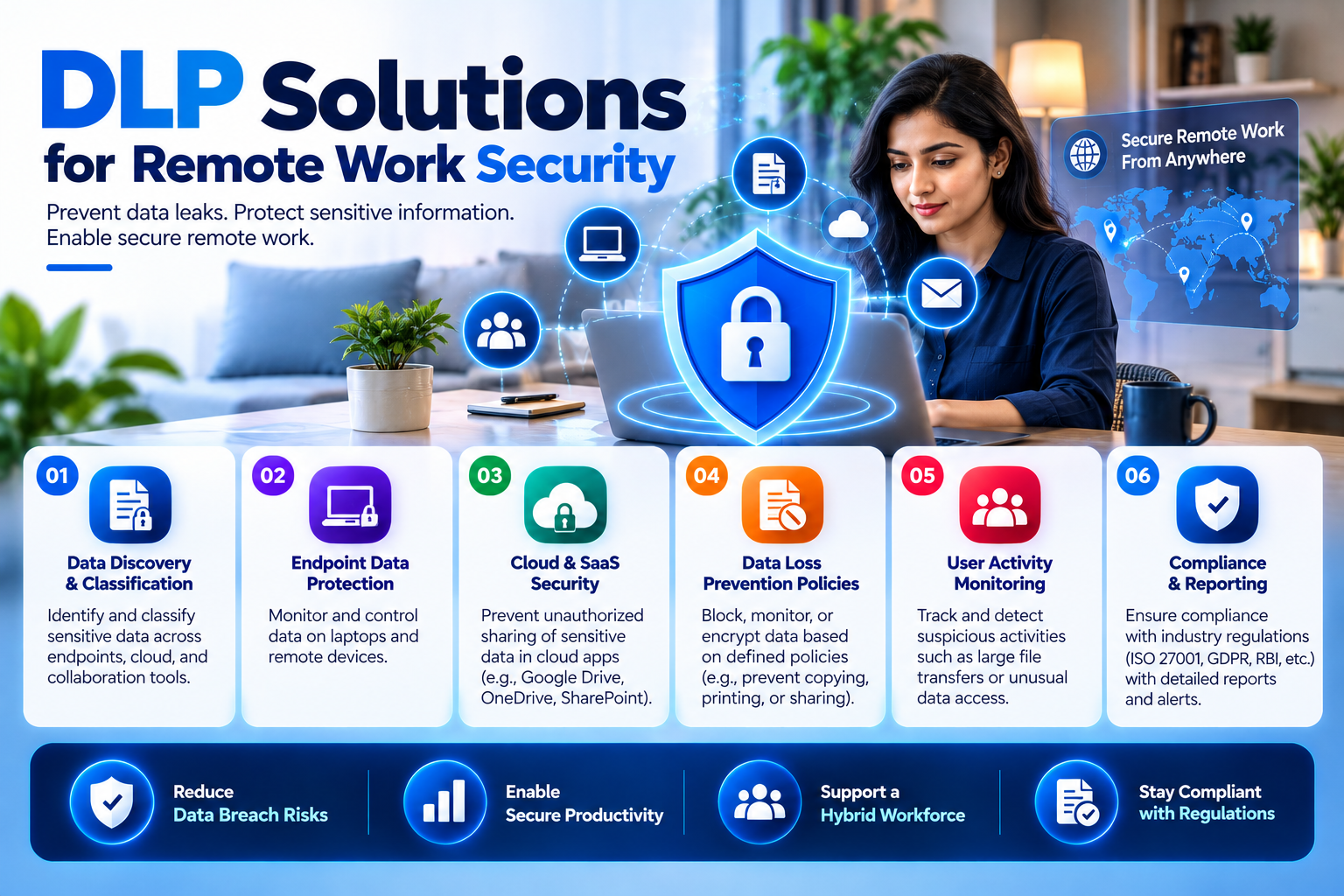
DLP identifies sensitive information and applies rules to how it's accessed, shared, or transferred. This may include customer details, financial documents, employee records, or confidential business files.
For example, if someone attempts to email a restricted document outside the company, DLP may display a warning or block the transfer. It can also record unusual activity for investigation. These controls work alongside encryption, backups, and access management rather than replacing them.
Imagine an employee downloading a report at home, sharing it through a messaging app, then saving a copy to cloud storage. Nothing seems unusual until confidential information lands somewhere the company cannot control.
Common risks include:
Businesses considering data loss prevention services in Thane, India should first understand how employees use and share files. That reveals where safeguards are genuinely needed.
Endpoint DLP protects information handled on supported laptops and desktops. Depending on the product, it can detect copying to USB drives, printing restricted documents, or uploading sensitive files through certain browsers. Features vary by platform and configuration.
DLP can examine supported email and cloud services for risky sharing. If an employee tries sending a spreadsheet containing customer details externally, the system might warn them or block the message.
Not every document needs equal protection. A public brochure is different from a confidential financial report. Classification uses labels and detection rules to apply stronger restrictions where needed, without complicating routine tasks.
Alerts help security teams spot risky transfers, but context matters. Accidentally attaching the wrong file isn't the same as repeatedly exporting restricted records. Reviewing each situation helps teams respond proportionately.
Providers offering DLP solutions in Thane, India may help configure policies, test controls, review alerts, and adjust settings as working practices change.
Introducing DLP doesn't mean restricting every employee action. Start with information that needs protection most.
When comparing data loss protection services in Thane, India, ask about policy tuning, employee guidance, and compatibility with existing applications.
Every organisation handles information differently. A cloud-based team may need different controls from one using mostly desktop applications.
Review operating systems, email services, cloud platforms, and devices before comparing products. Businesses evaluating data loss prevention services in Thane, India should also discuss data residency, administrative access, incident responsibilities, and maintenance.
Before rollout, confirm who can approve exceptions and how employees should report blocked work. Clear ownership keeps security decisions consistent and prevents avoidable delays during busy periods.
Ask how legitimate sharing will continue. Effective policies should protect confidential files without making everyday work unnecessarily difficult.
DLP stands for data loss prevention. It helps identify sensitive information and prevent inappropriate sharing, copying, or transfer.
Remote workers use multiple devices and online services. DLP helps apply consistent safeguards when information moves beyond office networks.
Look for endpoint controls, email and cloud coverage, configurable policies, alerts, reporting, and support for existing systems.
Yes, depending on configuration. DLP may warn employees, request justification, or block selected messages containing sensitive information.
DLP reduces improper data movement. Backups restore information after deletion, corruption, or disruption. Most organisations benefit from both.
Yes. Smaller businesses can start with straightforward rules that match their risks, budgets, and available IT resources.


 Home
Home