Data theft has become a serious concern for businesses operating in today’s digital environment. Companies of all sizes manage valuable information such as customer records, financial documents, employee data, intellectual property, and internal business files. Protecting this information requires more than basic security tools. Businesses need a structured approach that focuses on preventing unauthorized access, monitoring data activity, and controlling how sensitive information is shared.
Implementing Data loss prevention services in Thane, India helps organizations identify security risks, monitor sensitive data movement, and reduce the chances of accidental or unauthorized data exposure.
With businesses increasingly using cloud applications, remote devices, and digital workflows, traditional security methods alone are not enough. Organizations looking for Data loss protection services in Thane, India need solutions that provide better visibility, access control, encryption, and security monitoring.
A well-planned data protection strategy helps businesses protect important information, maintain customer trust, and reduce the impact of potential security incidents.
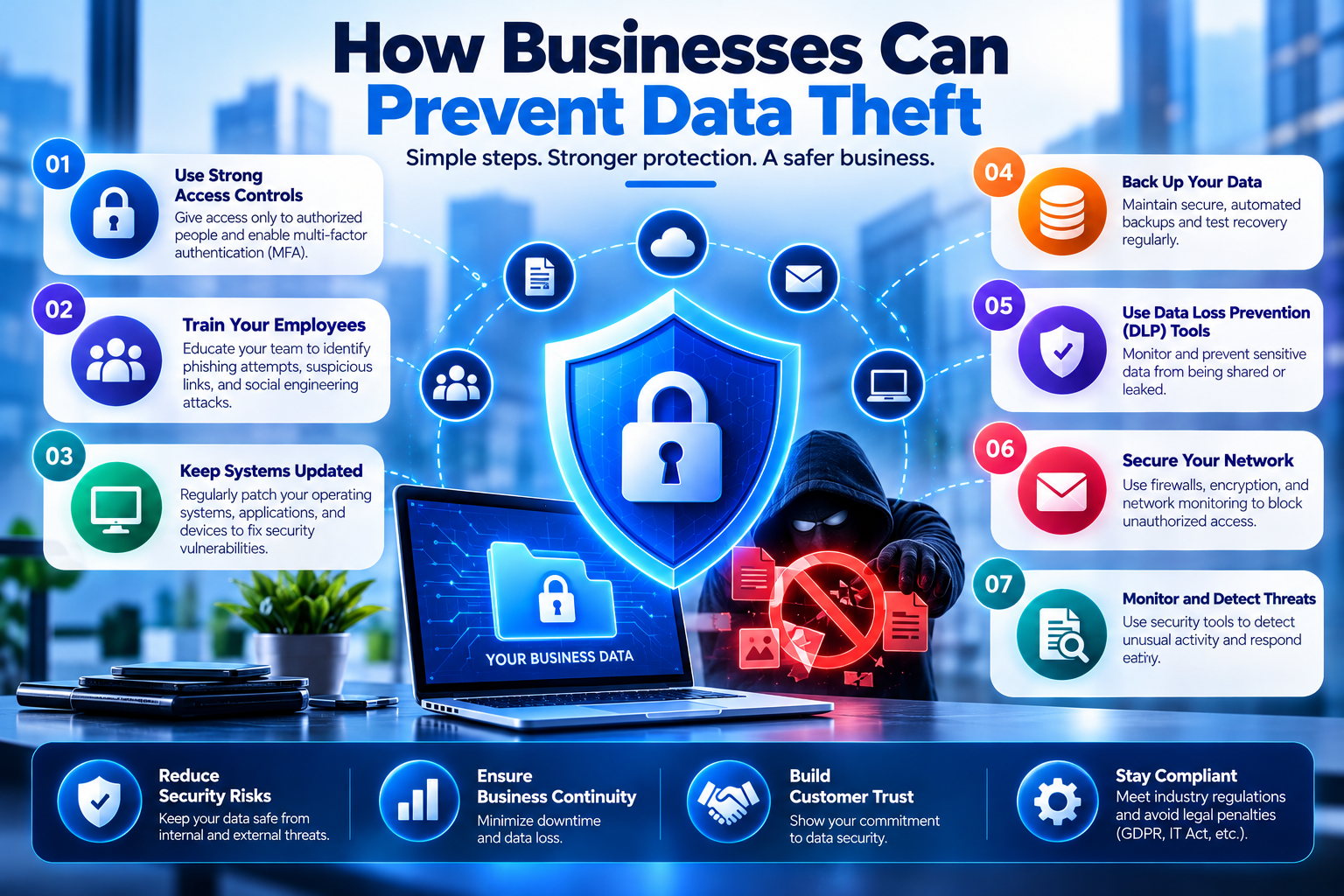
Digital information has become one of the most important assets for businesses. Customer details, payment information, employee records, contracts, and confidential company documents are frequently accessed and shared across different devices and platforms.
Without proper protection measures, sensitive information can be exposed due to cyber attacks, employee mistakes, weak access controls, or improper file-sharing practices.
A data breach can affect business operations, damage reputation, and create compliance challenges. To reduce these risks, businesses need a clear understanding of where sensitive information is stored, who can access it, and how it moves across systems.
Modern Data loss prevention services in Thane, India help organizations improve data visibility and establish better control over sensitive information across networks, devices, and cloud environments.
Understanding the reasons behind data theft helps businesses create stronger security strategies. Data exposure can happen due to external threats as well as internal security weaknesses.
Phishing attacks are one of the most common methods used by cybercriminals to access business information. Attackers often send fake emails, messages, or login pages designed to steal employee credentials. Once access is gained, attackers may attempt to access confidential files, customer information, or internal systems.
Not all data leaks happen because of external attackers. Employees, contractors, or third-party users with access to company systems can unintentionally or intentionally expose sensitive information. Proper access management and monitoring help businesses reduce the risk of insider-related data leaks.
Poor password practices, unnecessary user permissions, and inactive accounts can create security gaps. Employees should only have access to the information required for their specific roles. Regular access reviews help prevent unauthorized users from gaining unnecessary control over sensitive data.
Businesses frequently share files through emails, cloud platforms, and external devices. Without proper security controls, confidential information can accidentally reach the wrong person or become exposed.
The first step in protecting business data is understanding what information requires additional security. Organizations should identify important files, databases, and documents and classify them according to sensitivity.
Data classification helps businesses:
Using Data loss protection services in Thane, India helps organizations create a systematic approach to managing and securing important business information.
Access control plays an important role in preventing unauthorized data usage. Employees should only receive access to information required for their responsibilities.
Businesses should:
Strong access policies reduce the possibility of unauthorized data access.
Business information moves continuously between computers, mobile devices, cloud platforms, and external storage devices. Monitoring these activities helps identify unusual behaviour and possible security risks.
DLP systems can monitor:
This visibility allows businesses to identify potential data leaks and take corrective action quickly.
Encryption protects sensitive information by converting it into a secure format that cannot be accessed without proper authorization.
Businesses should consider encryption for:
Encryption adds an additional layer of protection even if unauthorized access occurs.
Employees are an important part of an organization’s cybersecurity framework. Many data leaks occur due to mistakes such as clicking malicious links, sharing incorrect files, or using weak passwords.
Security awareness training should include:
A trained workforce helps reduce human-related security risks.
Implementing DLP solutions in Thane, India helps businesses improve their ability to protect sensitive information and manage security risks effectively.
Key benefits include:
Every business has different security requirements depending on its industry, technology environment, and type of information handled.
Before implementing a data protection strategy, businesses should evaluate:
A proper assessment helps organizations identify security gaps and implement suitable protection measures.
Reliable Data loss prevention services in Thane, India enable businesses to build a stronger approach toward protecting critical information and reducing the risks associated with data theft.
Data loss prevention services in Thane, India help businesses protect sensitive information by monitoring data usage, controlling access, and preventing unauthorized sharing.
Data loss protection services in Thane, India help organizations reduce data security risks, protect confidential information, and prevent accidental or unauthorized data exposure.
DLP solutions in Thane, India monitor sensitive data activity, identify potential risks, enforce security policies, and help prevent data leakage.
Yes, DLP solutions can monitor user activity, identify unusual data transfers, and reduce risks caused by accidental or unauthorized sharing of sensitive files.
Businesses handling customer data, financial records, healthcare information, intellectual property, and confidential documents can benefit from data protection solutions.
Employee training helps staff understand cybersecurity risks, follow secure data-handling practices, and reduce mistakes that may lead to data leaks.


 Home
Home