Not every data breach begins with an outside hacker. Sometimes a spreadsheet reaches the wrong customer, a contractor keeps access after a project ends, or an employee copies confidential files before leaving. These are insider risks, and they can affect organisations of any size. Data loss prevention services in india help identify sensitive information and control how it moves through email, devices and cloud applications.
Businesses evaluating Data loss protection services in india or dlp solutions in india should first understand where their important information lives. For teams considering Data loss prevention services in Thane, the challenge may involve shared drives, remote staff or third-party access. Similarly, dlp solutions in Thane work best when technical safeguards support clear workplace rules. No tool can prevent every mistake or deliberate leak, but practical controls can reduce exposure. The aim is to protect information while allowing employees to complete their work without delays or interruptions.
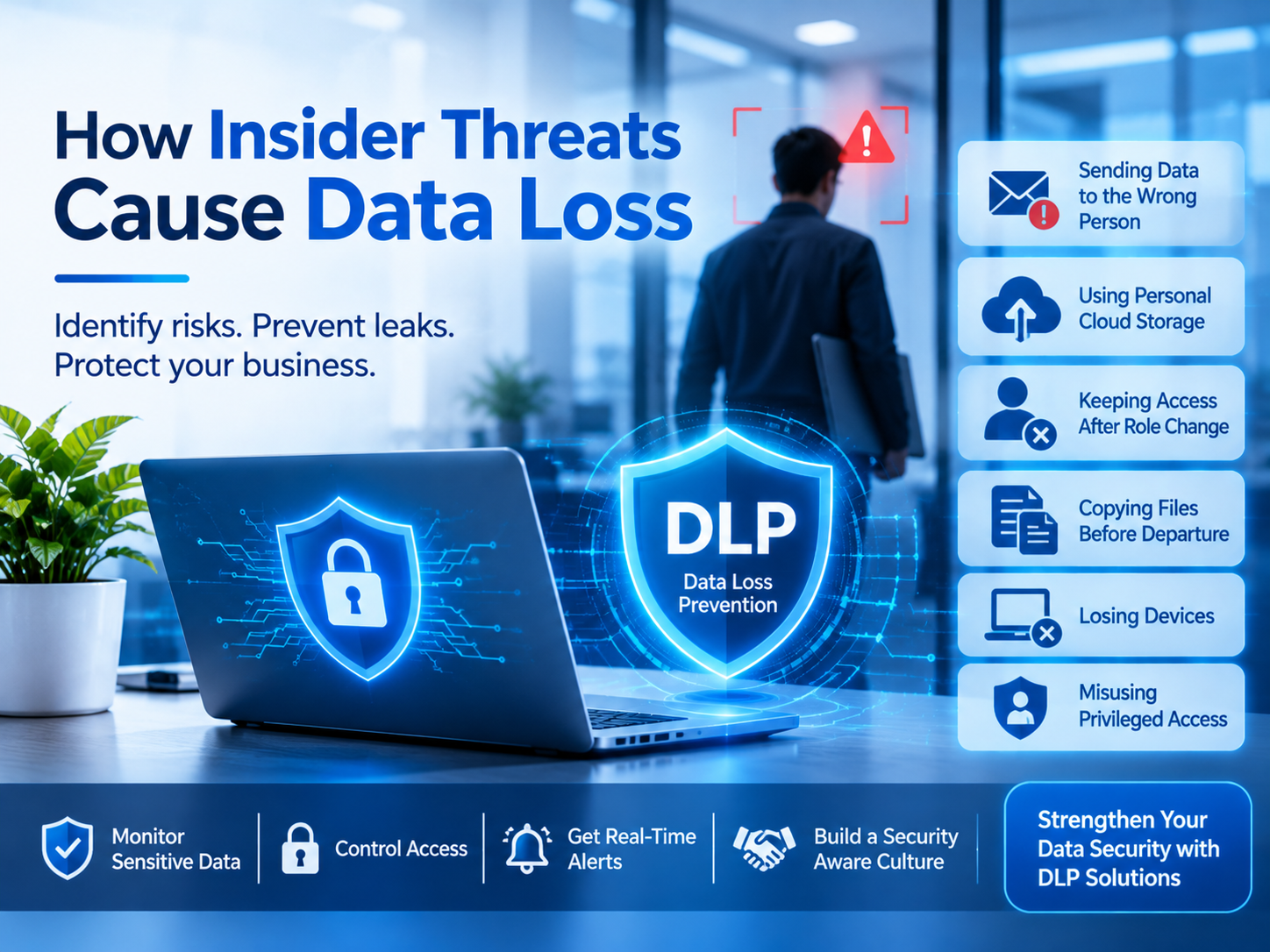
An insider is someone with legitimate access to company systems or information, including employees, contractors and suppliers. Insider incidents may be accidental, careless or intentional. A staff member attaching the wrong invoice is different from someone deliberately stealing customer records, although both can expose sensitive data.
Importantly, unusual behaviour isn't proof of wrongdoing. Investigations need evidence, proportional monitoring and fair processes rather than assumptions about individual employees.
An employee selects the wrong recipient in an email or shares a cloud document with public access enabled. The information might include salary details, account records or client contracts. Simple approval prompts, recipient checks and restrictions on external sharing can prevent some of these incidents.
Staff sometimes move files to personal accounts to finish work at home. Convenience creates problems when company information leaves managed systems. If the personal account is compromised, the organisation may have little visibility into where those files travel next.
A salesperson who moves to another department may retain access to customer exports they no longer need. Former contractors can pose similar risks if accounts remain active. Regular permission reviews and prompt account removal reduce unnecessary access.
An employee might download pricing sheets, designs or customer lists before joining another employer. Such activity may violate company policies or legal obligations. However, ordinary bulk downloads also occur during legitimate projects, so alerts require context before anyone draws conclusions.
A misplaced laptop or unencrypted USB drive can expose information without any malicious intent. Device encryption, controlled removable media and remote management reduce the damage if equipment goes missing.
Administrators often have broad access needed for maintenance. That makes their accounts particularly sensitive. Separate administrative identities, limited privileges and protected audit logs help organisations investigate activity while reducing unnecessary exposure.
Data loss prevention tools can recognise sensitive material using labels, patterns and document characteristics. Depending on their configuration, they may warn users, block uploads, restrict copying or alert security teams. Data loss protection services in india may combine these controls with policy development and incident handling.
Effective dlp solutions in india should cover the channels employees actually use, not simply email. Endpoint devices, collaboration platforms and approved cloud services deserve attention. But aggressive blocking can interrupt legitimate work. Begin with observation, tune policies against real activity and introduce restrictions where risks justify them.
Organisations comparing Data loss prevention services in Thane should ask which channels are covered, how false alarms are handled and who responds to incidents. Evaluating dlp solutions in Thane also means checking integration with existing email, identity and cloud systems. Technology should support everyday work rather than make safe behaviour difficult. Periodic reviews are important because new applications, changing job roles and business partnerships can create routes for information to leave.
It's a risk involving someone with authorised access who accidentally, negligently or deliberately exposes, steals or damages company information.
Some DLP controls can restrict copying to USB drives or unapproved applications. Coverage depends on devices, policies and configuration.
No. Mistaken email recipients, lost devices and careless sharing can cause data loss without malicious intent.
Antivirus primarily detects malicious software. DLP focuses on identifying sensitive information and controlling or monitoring its movement.
Businesses handling sensitive customer or financial records may benefit. The appropriate controls depend on their risks, systems and resources.


 Home
