How often should a business test its systems for security weaknesses? Regular vulnerability scans and annual penetration testing offer a sensible starting point. But annual testing alone is not always enough. A changing customer portal faces different risks from a stable internal tool. Businesses researching Vulnerability Assessment & Penetration Testing in India should consider data sensitivity, internet exposure, compliance obligations and release frequency. A VAPT service in india can identify security gaps, but the testing schedule matters only when teams also fix problems and verify those fixes. When comparing vapt services in thane, look for clear scope, reporting and retesting rather than standard packages.
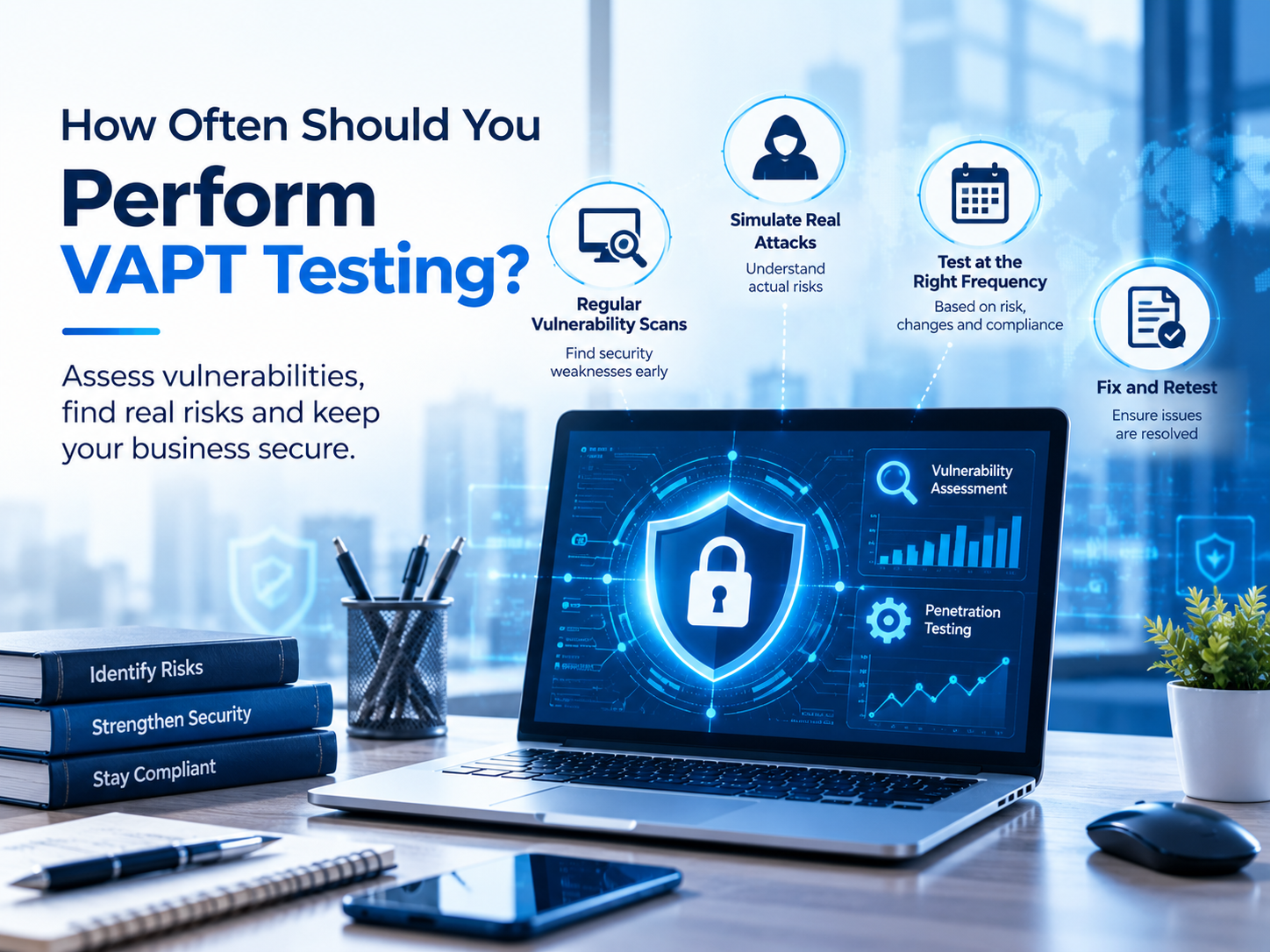
A vulnerability assessment looks for known weaknesses, outdated software, insecure settings and other possible points of entry. Automated scanning plays an important role, especially when organisations manage hundreds of devices or applications.
Penetration testing answers a different question: could someone exploit a weakness, and what might happen if they did? Authorised testers use controlled techniques to examine realistic attack paths. Full penetration tests generally happen less often than scans.
For Vulnerability Assessment & Penetration Testing in India, the useful approach is to combine regular discovery with targeted manual testing and follow-through on findings.
A stable internal tool with limited access and little sensitive information might be scanned quarterly and penetration tested annually. That is a planning baseline, not an assurance that the system is safe between tests. Significant configuration changes should still prompt a review.
Customer dashboards, employee platforms and standard cloud applications often warrant monthly vulnerability scanning and penetration testing every six to twelve months. If developers release new features frequently, security checks should be tied to those releases too.
Payment applications, healthcare systems, public APIs and services storing sensitive personal information generally need closer attention. Continuous monitoring or frequent scans, together with penetration testing every three to six months where justified, may be appropriate. The exact interval should reflect actual risk, not simply the industry label.
A VAPT service in india should help identify the systems where a successful attack would cause the greatest harm.
Security risks do not wait for the next annual audit. Arrange targeted testing when changes could introduce new vulnerabilities, such as:
Once a weakness has been addressed, retesting helps confirm that the fix works. This may involve checking only affected components rather than repeating an entire penetration test.
There is no single VAPT testing interval that applies to every organisation in India. Requirements vary by sector, contract and regulatory framework. For example, PCI DSS requires applicable internal and external penetration testing at least once every twelve months and after significant changes; vulnerability scanning follows separate requirements.
CERT-In guidance also emphasises security auditing and assessments appropriate to the environment. Organisations should check the rules relevant to their operations rather than treating a quarterly test as a universal legal requirement.
While evaluating vapt services in thane, ask how the testing plan supports applicable standards and the evidence your organisation must maintain.
Begin by listing your websites, applications, servers, endpoints, cloud resources and external integrations. Identify who uses each system, whether it is publicly accessible and what information it processes. Then prioritise testing based on the likely impact of a breach.
Your plan should answer five practical questions:
Keep previous reports and remediation records readily accessible. Patterns such as recurring access-control issues can reveal where development or configuration processes need improvement. A VAPT service in india adds the most value when findings lead to measurable corrective action.
Not for every business. Some sectors or contracts impose specific intervals; others require a schedule based on risk and applicable standards.
Annual testing is a common baseline. Test sooner after major changes, especially if the website handles payments or sensitive customer data.
No. Scans flag possible weaknesses, while penetration testing checks whether selected issues can be exploited and what impact they could have.
Ideally before launching important public-facing services, then after major changes and at intervals appropriate to their exposure and data sensitivity.
Check methodology, tester experience, scope, reporting quality, confidentiality practices, remediation guidance and whether retesting is included.
No. Results cover a particular scope and point in time. New weaknesses can appear after testing ends.


 Home
