A customer spreadsheet reaches the wrong email address. A contractor can still open company files months after completing a project. An employee shares a cloud folder without realising that anyone with the link can view it. None of these incidents requires a sophisticated attack, yet each can expose information an organisation has a responsibility to protect.
Businesses researching Data loss prevention services in india need to understand where sensitive information is stored, who can access it, and how it is shared. Data loss protection services in India can help reduce inappropriate disclosure, while Dlp solutions in India support monitoring and policy enforcement across common workplace systems.
Technology matters, but so do sound processes and employees who understand them.
For example, a finance team may need to share invoices externally, while human resources must restrict access to employee documents. Different workflows call for different safeguards in practice, not a single blanket rule.
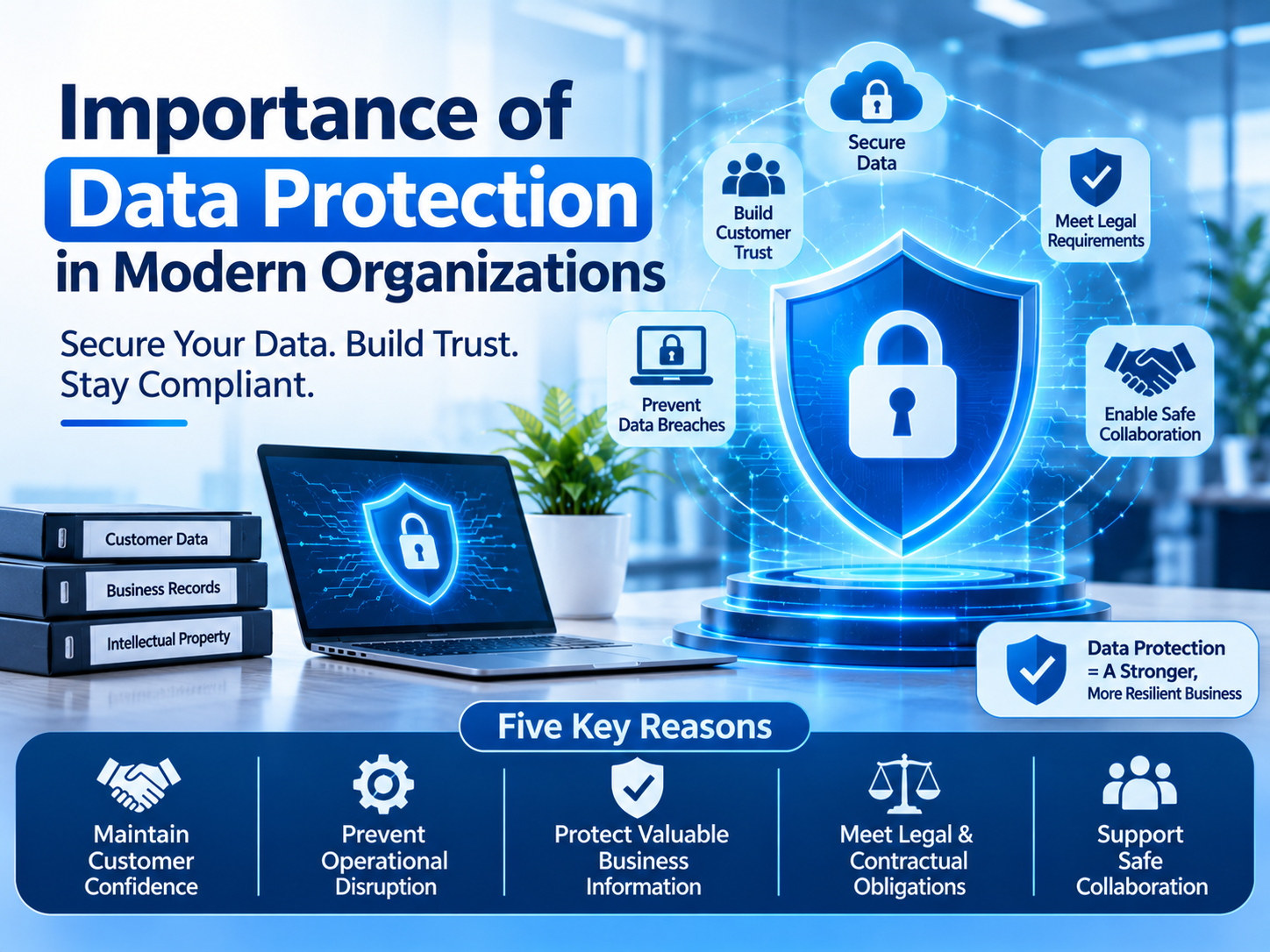
Data protection covers the responsible collection, storage, use, sharing, and disposal of information. This includes customer details, employee records, contracts, financial reports, and intellectual property.
Cybersecurity helps defend systems and data against threats. Privacy concerns the appropriate handling of personal information. They overlap, but organisations need policies for both. For example, a secure database can still create privacy problems if it retains personal details unnecessarily.
Customers provide information expecting it to be handled carefully. An exposed identity document or contact list may lead to complaints, investigations, or lost confidence, even when no immediate financial loss occurs.
Trust depends on daily decisions: limiting access, explaining how information is used, and responding openly when incidents occur. A privacy notice cannot compensate for poor handling practices.
When important files become unavailable, teams may struggle to process orders, answer enquiries, or deliver services. Recovering information can involve restoring backups, checking affected accounts, and notifying relevant parties.
Reliable backups and tested recovery procedures therefore remain essential. DLP helps detect or prevent certain unauthorised transfers; it cannot restore deleted data or replace a business continuity plan.
A company's pricing strategy, product designs, source code, and supplier agreements may be commercially sensitive. Such files can be exposed through overly broad permissions, personal storage accounts, or access that remains active after employment ends.
Classifying documents and regularly reviewing permissions helps protect this information while allowing legitimate collaboration.
Organisations may need to meet obligations under Indian privacy legislation, sector-specific requirements, and customer contracts. The Digital Personal Data Protection framework has phased commencement provisions, so the applicable requirements must be checked rather than assumed.
Legal compliance involves more than installing software. Businesses need appropriate notices, internal responsibilities, retention practices, and incident procedures based on their circumstances.
Work often involves shared drives, messaging tools, contractors, and employees accessing files from different locations. A document may pass through several platforms before a project ends.
When evaluating Data loss prevention services in india, examine these workflows. Monitoring corporate email alone may leave gaps in browser uploads, personal cloud accounts, or removable storage.
DLP tools identify sensitive content and apply rules to how it is handled. Depending on configuration, they may display a warning, ask for a business justification, notify administrators, or block a transfer.
Controls can cover email, endpoint devices, cloud applications, and web activity. Classification labels, content patterns, and contextual signals help determine which information requires attention.
Data loss protection services in India may include discovery, deployment, policy tuning, monitoring, and incident support. Capabilities vary, so organisations should confirm which channels and data types are actually covered.
Start by identifying information whose exposure could cause financial, operational, or reputational harm. Then establish how employees use it.
Before rolling out Dlp solutions in India widely, test policies with real business workflows. Review false positives and legitimate exceptions. Effective controls should reduce exposure without unnecessarily disrupting work.
Why is data protection important for businesses?
It helps protect confidential records, maintain customer trust, reduce disruption, and meet relevant obligations.
Which company data should receive priority?
Prioritise personal information, credentials, financial records, contracts, and intellectual property according to potential harm.
What do Data loss prevention services in india include?
They may offer data discovery, policy configuration, monitoring, and incident support. Confirm the provider's exact scope.
Can small businesses use Data loss protection services in India?
Yes. Smaller organisations can begin with important data, manageable access controls, and proportionate monitoring.
How are Dlp solutions in India different from backups?
DLP addresses sensitive data movement; backups help restore information after loss or damage. Both serve distinct needs.
Does DLP guarantee complete protection?
No. Protection also requires employee awareness, access management, secure systems, incident planning, and regular review.


 Home
