Network security refers to the measures used to protect computer networks, connected devices, applications, and data from unauthorized access and cyberattacks. It combines security technologies with practical policies, defined processes, and trained employees to keep business data private, accurate, and available.
The need for stronger security has grown as businesses adopt cloud services, remote working, mobile devices, and connected systems. Each new connection can create another possible entry point for attackers. Proper network security solutions in India help organizations manage these risks, meet compliance requirements, and keep essential systems running without interruption.
These solutions commonly include firewalls, access controls, data encryption, intrusion prevention, secure remote connections, and continuous network monitoring.
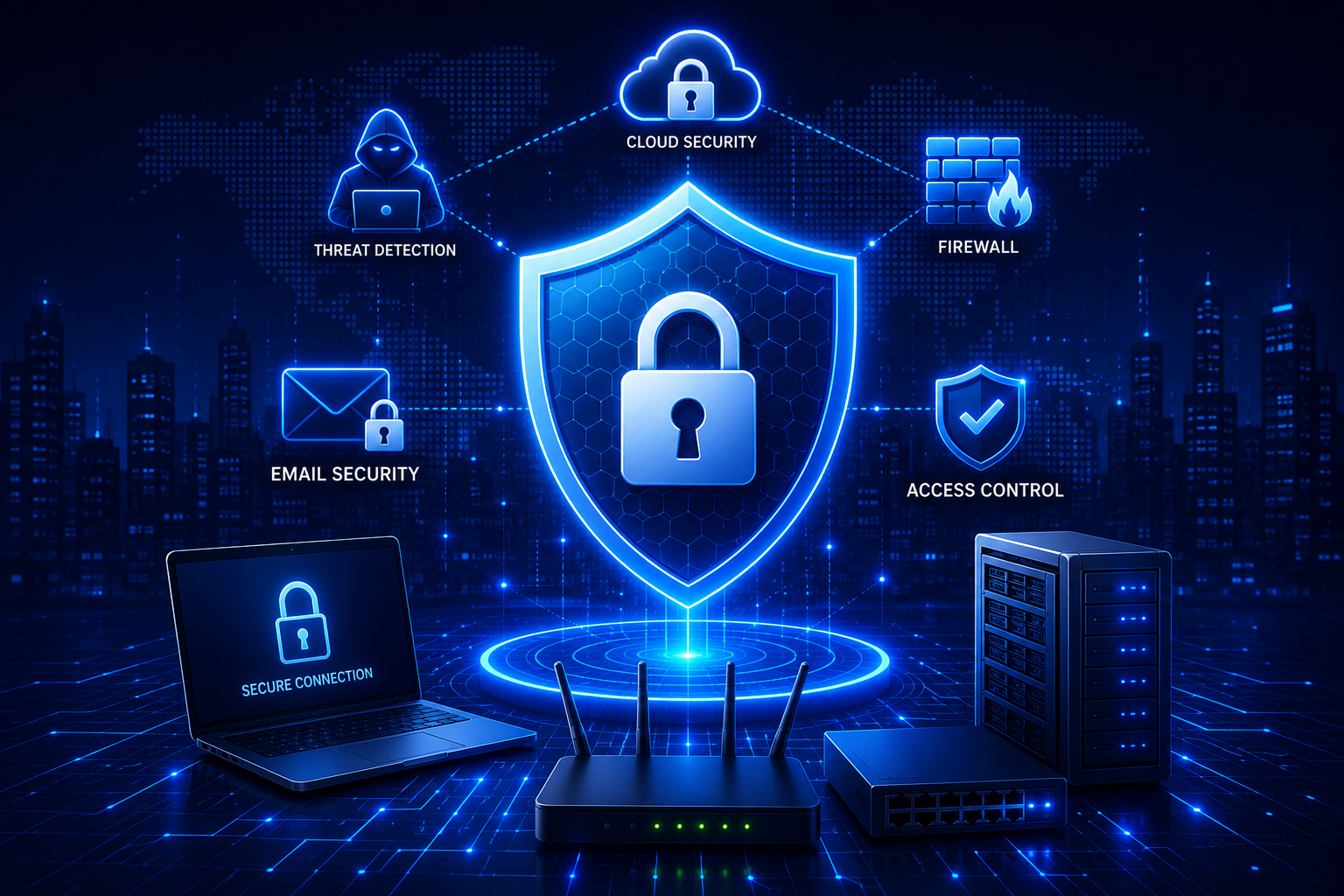
Network security controls who can connect to a network, which resources they can use, and what activities they can perform. It protects several areas, including network boundaries, internal systems, employee devices, wireless networks, cloud platforms, and data moving between locations.
Most network security solutions in India use a layered approach known as defence in depth. This means an organization does not depend on one security product. Instead, it combines preventive, detective, and corrective controls.
If an attacker manages to bypass one control, another layer may block the activity, alert the security team, or prevent access to important information.
A standard network security process includes:
Protects Sensitive Information
Business networks carry customer records, financial information, passwords, intellectual property, and internal documents. Without suitable protection, this information may be stolen, changed, exposed, or destroyed. Security controls protect data while it is stored and while it travels between users, devices, offices, and cloud platforms.
Prevents Business Disruption
Ransomware, distributed denial-of-service attacks, malware, and compromised accounts can interrupt normal operations. Employees may lose access to important applications, while customers may be unable to use essential services. Reliable network security solutions in India can detect suspicious activity early, isolate affected systems, and reduce the operational impact of an attack.
Helps Meet Compliance Requirements
Organizations may need to meet industry-specific security standards and applicable Indian data protection requirements. Security controls such as access reviews, activity logs, encryption, and incident-response procedures can demonstrate that reasonable safeguards are in place. Compliance requirements vary by industry, so businesses should identify the rules that apply to their operations and data.
Maintains Customer Trust
Customers and business partners expect their information to be handled carefully. A data breach can cause financial loss, service disruption, and long-term damage to an organization’s reputation. Strong security practices show that the organization takes data protection seriously and is prepared to respond if an incident occurs.
Firewalls
Firewalls inspect incoming and outgoing traffic using predefined security rules. They allow approved connections and block traffic that appears unauthorized or harmful. Next-generation firewalls may also identify applications, users, malware, and suspicious patterns within encrypted traffic.
Intrusion Detection and Prevention
An intrusion detection system alerts security teams when it finds potentially harmful activity. An intrusion prevention system goes further by automatically blocking known attacks, malicious traffic, or policy violations. These systems help organizations respond before a threat reaches critical resources.
Network Access Control
Network access control verifies users and devices before allowing them to connect. It can deny or limit access when a device is unmanaged, outdated, infected, or does not meet the organization’s security requirements. Risky devices may be placed in an isolated section of the network until the issue is resolved.
Virtual Private Networks
A virtual private network creates an encrypted connection for remote employees and branch offices. This protects information when it travels through public internet connections. However, a VPN should still be supported by multifactor authentication, access restrictions, and regular monitoring.
Cloud and Zero Trust Security
Cloud security protects hosted applications, workloads, identities, configurations, and stored data. These controls are especially important when organizations use several cloud platforms. Zero Trust follows the principle that no user or device should be trusted automatically. Every access request must be verified, and users should receive only the permissions required for their work.
Businesses reviewing network security solutions in India should consider the threats most relevant to their systems and operations.
Common risks include phishing, ransomware, malware, stolen passwords, insider misuse, outdated software, insecure Wi-Fi, cloud misconfigurations, and denial-of-service attacks. Compromised suppliers and poorly secured Internet of Things devices may also provide indirect access to business networks.
Understanding where these threats may enter is essential for selecting suitable controls.
The selection process should begin with a risk assessment rather than a list of security products. Organizations should identify their critical systems, sensitive data, current vulnerabilities, compliance responsibilities, and acceptable level of downtime.
The right security setup will depend on the organization’s size, industry, workforce, infrastructure, and available technical resources.
When comparing solutions, check whether they provide:
Even the best network security solutions in India require ongoing attention. Organizations should conduct vulnerability assessments, review configurations, test backup recovery, and practise incident-response procedures regularly.
Tracking detection time, response time, patching status, access violations, and recurring vulnerabilities can help security teams identify weaknesses and measure improvement.
1. What is network security in simple terms?
Network security protects connected systems and data from unauthorized access, cyberattacks, damage, and disruption through security tools, access rules, monitoring, and response procedures.
2. Which network security solution is most important?
No single tool provides complete protection. Firewalls, identity controls, endpoint security, encryption, segmentation, monitoring, backups, and incident-response plans should work together.
3. Why do small businesses need network security solutions in India?
Small businesses also store valuable customer, employee, and financial information. Suitable security controls reduce their exposure to phishing, ransomware, fraud, data loss, and operational downtime.
4. How often should network security be reviewed?
Networks should be monitored continuously and formally reviewed at least once a year. Additional reviews are necessary after significant system changes, security incidents, new threats, or regulatory updates.
5. What is the difference between network security and cybersecurity?
Cybersecurity covers the protection of digital devices, applications, systems, and information. Network security is one part of cybersecurity focused on network infrastructure, connections, traffic, and access.
For comprehensive network security solutions, please visit Network Security Solutions India.


 Home
Home